

Commercial asphalt paving : parking lots for businesses, offices, condos and institutions
Paving the parking lot of a store, office building, condo, institution or industrial site is done in sections, so the property stays open. We plan the work with the manager or condo board, rework the slopes toward the catch basins, reinforce the truck lanes and repaint the lines afterward.
A parking lot that stays open during paving
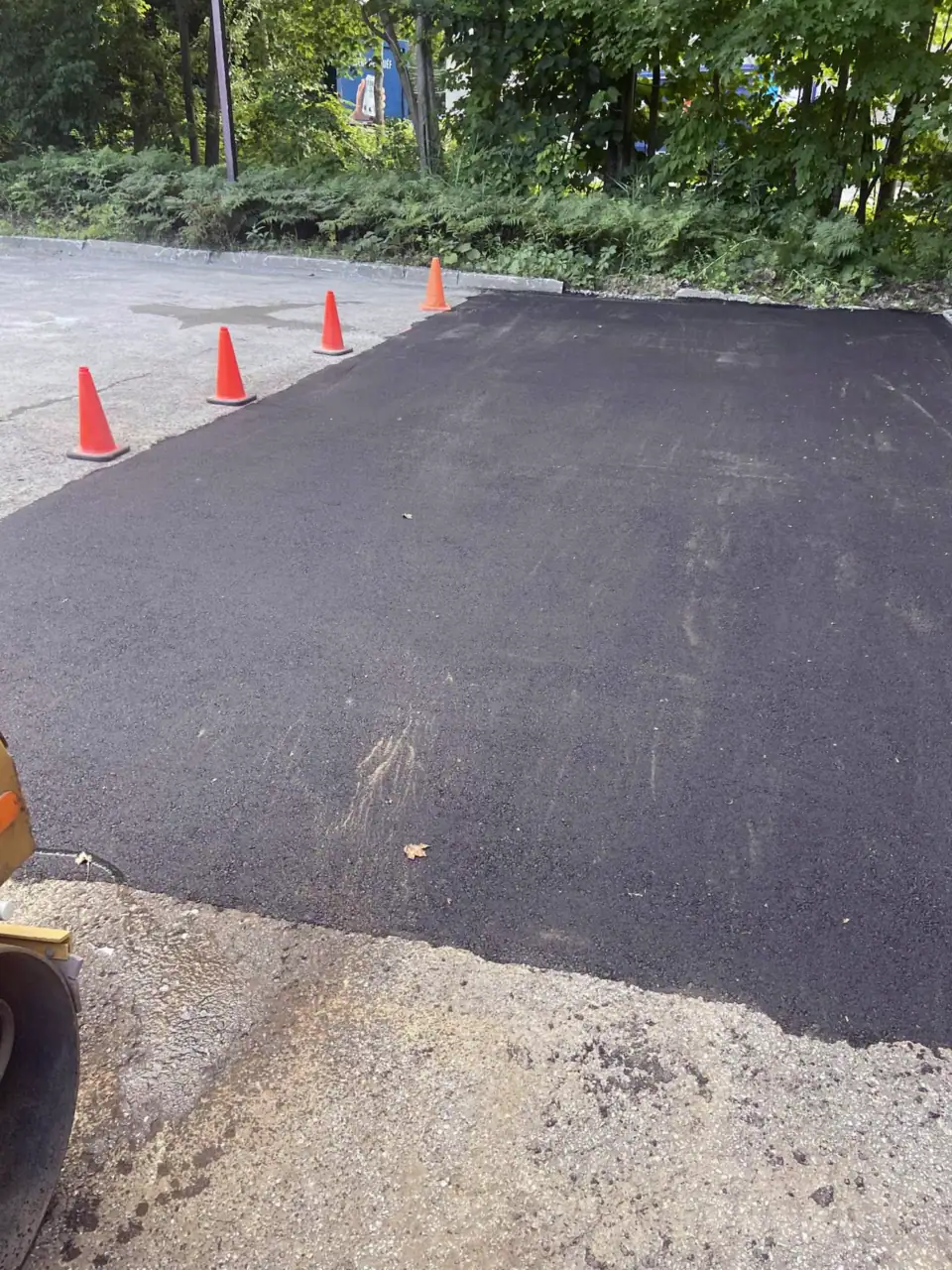
A commercial parking lot doesn't have to close all at once. We divide it into sections that are prepared and paved one after the other, keeping an entrance, an exit and access to the doors open. Cones and temporary signs keep the work zone separate from the area where people are still driving and walking.
The order of the sections is set with the building manager or the condo board: business hours, deliveries, residents' spaces and the notices occupants need. The clearer the plan is before work begins, the less it disrupts the people who use the lot.
Decided before paving: water and trucks
A puddle that comes back after every rain points to a low spot or a slope that's too flat. Standing water seeps into the base, freezes in winter and turns into a sheet of ice for pedestrians. Before paving, we survey the slopes across the whole surface so water reaches the catch basins, and around each grate, the asphalt dips slightly toward it.
Lanes used by delivery trucks, garbage trucks or buses take far more wear than the spaces where cars park. In front of a loading dock or a dumpster, where heavy vehicles brake, turn and stop, we plan a stronger structure: more compacted stone and a thicker layer of asphalt. Without it, ruts and sunken areas show up quickly.
After paving: lines and maintenance
Paving wipes out the old markings. Before the work starts, we note the layout of the spaces, arrows and reserved zones, or rework it with you; once the asphalt is ready, we handle the line striping and markings too. There's no other contractor to coordinate.
A new parking lot needs care from its first season: winter sand picked up in spring, cracks fixed while they're still small, then a first coat of sealer once the asphalt is six to twelve months old. A maintenance contract groups this work together and keeps track of the surface from one year to the next.
Depending on the property
Every property has its own hours, users and constraints. The work plan starts there.
Stores and shopping centres
Customers always need to find a way in and spaces near the doors. We start with the sections farther away and keep the main entrance open while the rest is paved, then finish with the area around the entrance.
Office buildings
The lot fills up in the morning and empties in the evening. Sections are scheduled around those hours, and occupants are told ahead of time which spaces will close and where to park in the meantime.
Condos and rental buildings
Residents have to move their cars. The condo board or property manager sends out the notice, sections close one at a time, and we work out with them where cars can wait in the meantime, on the property or nearby.
Institutions and industrial sites
At a school, we schedule the work during school holidays when possible. At a plant or warehouse, it's organized around deliveries, keeping truck access open.
Parking lot paving, step by step
Site survey
Slopes, catch basins, puddles, truck areas and the current line layout: we note everything that will guide the work.
Section plan
The order of the sections, dates, which entrances stay open and notices to occupants, set with the people who run the building.
Preparing each section
We remove the old asphalt, correct the base and the slopes, and reinforce the structure where heavy vehicles travel.
Paving in sections
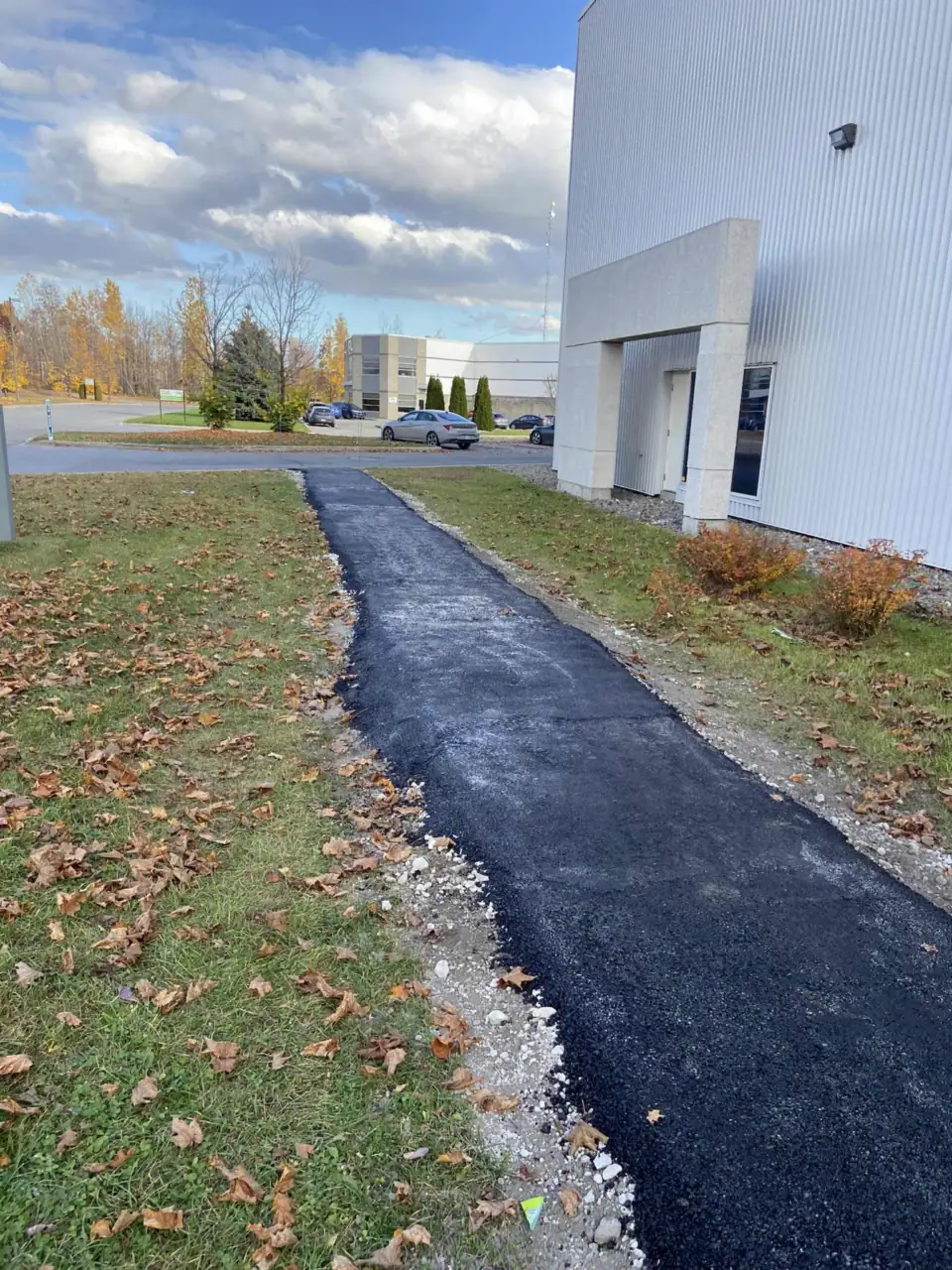
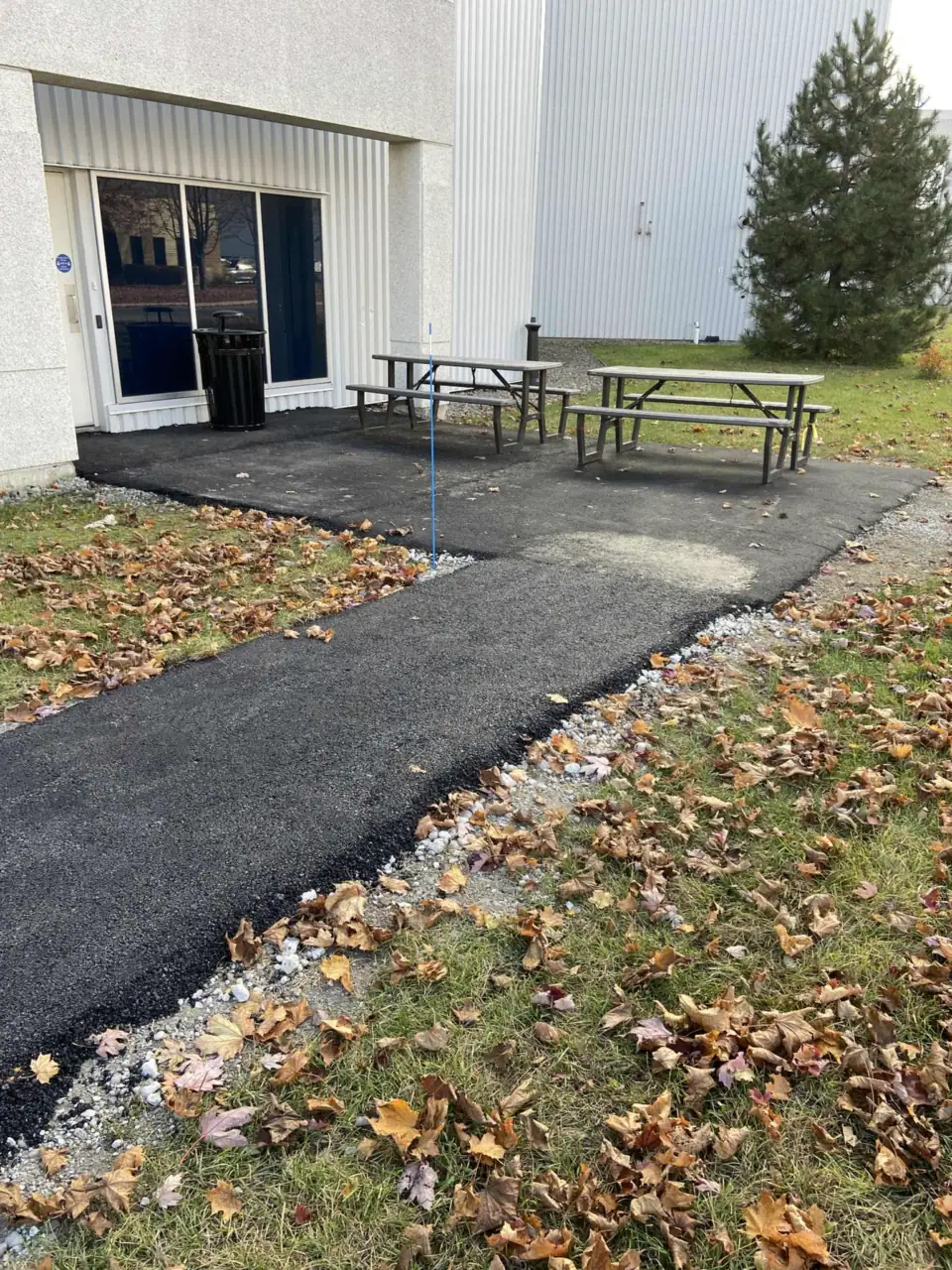
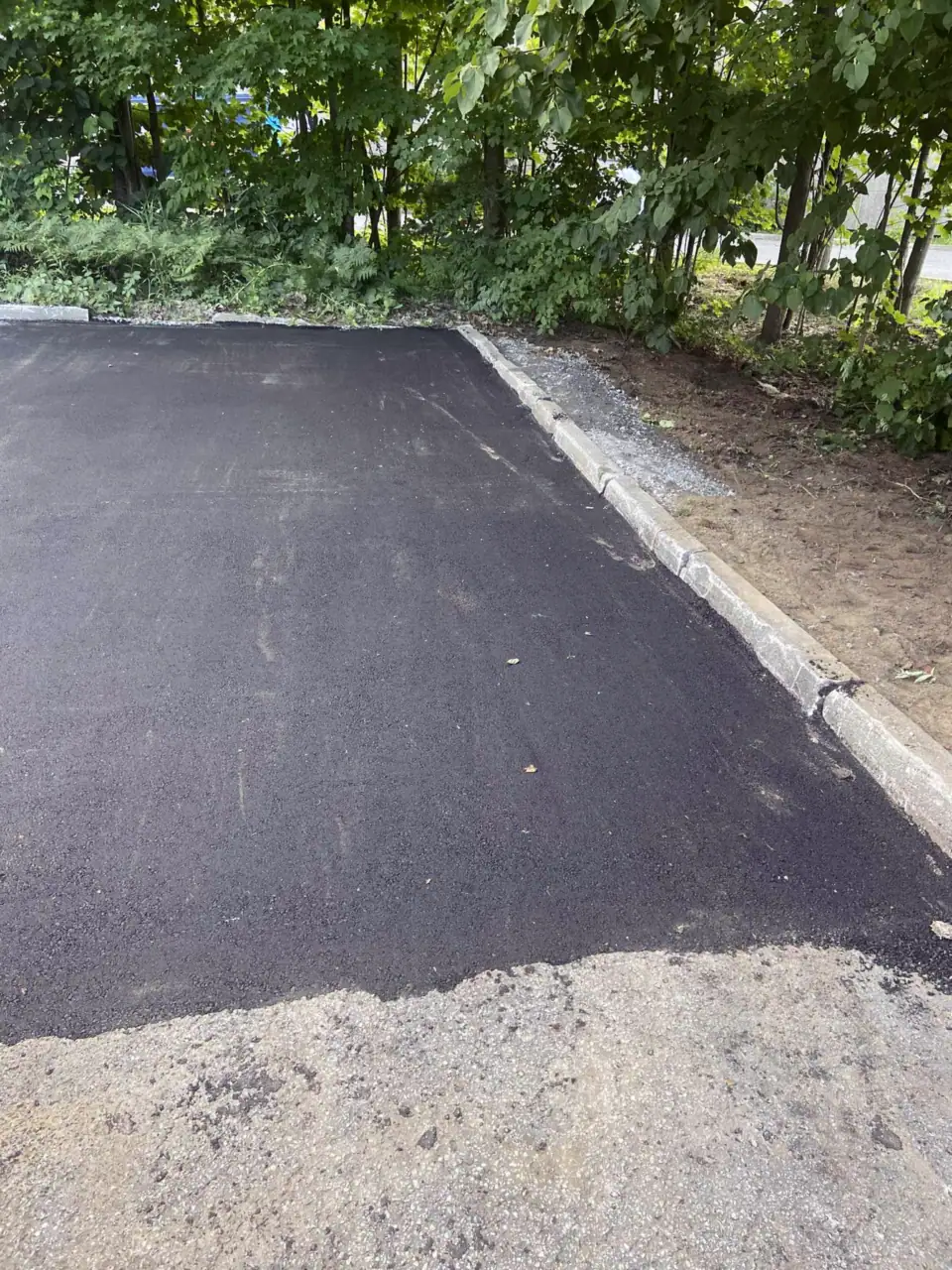
The section is paved with hot asphalt and rolled, joins around catch basins and curbs are finished carefully, then it reopens.
Lines and back in service
Once the asphalt is ready, we paint the lines, arrows and reserved spaces, and the lot goes back to normal use.
Our jobs
Frequently asked questions
When can a parking lot reopen after paving?
Section by section. A section reopens once the asphalt has cooled enough to carry traffic, but it stays soft for a while: tight turns and heavy vehicles parked in the same spot leave marks. The work plan sets the order in which sections reopen, and the lines follow once the asphalt is ready.
Is repaving a good time to redesign the parking layout?
Yes. The old markings are gone once the lot is repaved, so the new plan starts from a blank surface. Aisle widths, traffic direction, the delivery zone and the location of accessible spaces, whose requirements vary by city and type of building, can all be rethought. Our tips on parking lot line striping cover other points to check.
Who approves paving a condo parking lot?
The parking lot is usually a common portion, so the syndicate of co-owners awards the contract, through its board of directors or its manager. Depending on the declaration of co-ownership and the scope of the work, a vote at the general meeting may be needed, so confirm this before signing. Our quote details the work and the order of the sections, which helps when presenting the project to co-owners.
Is a permit required to pave a commercial parking lot?
The municipality decides, based on the work. A new parking lot, an expansion or a change to the entrances and layout may fall under its bylaws, drainage in particular. Even for repaving the same surface, check with the city. We go over it during the site visit, along with the constraints of the property.
See also

Line striping
Parking lots
A striping plan first, then lines, arrows, symbols and stall numbers, painted from scratch or over the existing layout on swept, dry pavement.
Learn more
Maintenance contracts
Parking lots
Sweeping, repairs, sealcoating and line striping combined into one annual plan, with priorities and a budget set in advance and a review at the end of the season.
Learn more
Asphalt repair
Asphalt
We find the cause of the damage first, then cut out and rebuild the area, base included if needed, or resurface when the base is sound.
Learn moreAreas we serve
Stores, condos or institutions: we pave parking lots in all of the areas below.

Get your free quote
Tell us about the work you need. We'll call you back to discuss it and prepare your quote.
Request a quote