
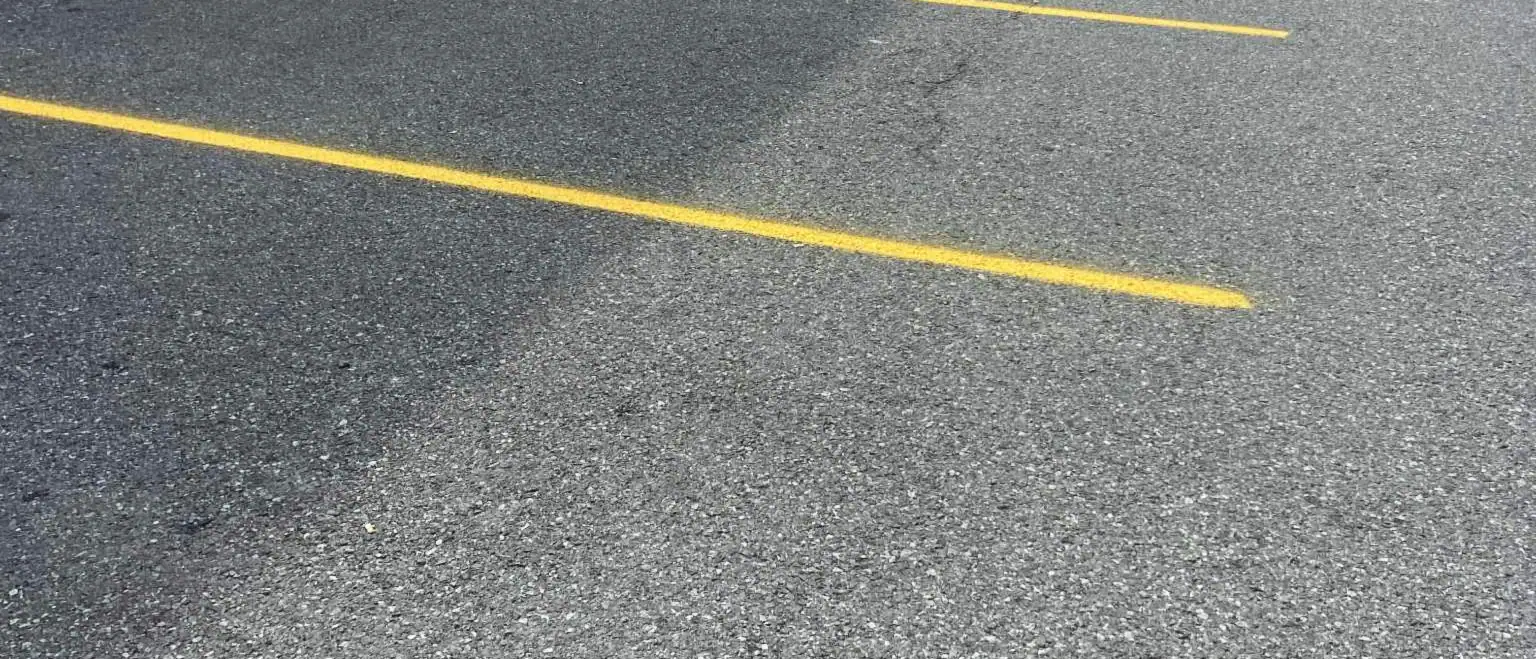
Parking lot line striping : why and when to repaint
Parking lot lines should be repainted as soon as they become hard to see, whether in daylight, at night or in the rain. In busy lots, restriping every year is common; elsewhere, the interval can be longer. The work is done on a clean, dry surface in warm weather, and always after sealcoating when both are planned.
Crisp lines aren't just about looks. They organize traffic, protect pedestrians and make reserved spaces clear. Here's why they matter and how to plan a repaint.
Why visible lines matter
In a parking lot, pavement markings do the job of road signs. They show drivers where to park, which way to go and where pedestrians can cross. When the lines fade, drivers improvise: spaces get wasted, cars end up parked at an angle and people drive the wrong way down the aisles.
- Safety: clearly visible crosswalks and hatched zones help prevent fender benders.
- Traffic flow: clear arrows cut down on hesitant manoeuvres and bottlenecks at entrances.
- Capacity: well-defined spaces make full use of the available area.
- Image: a well-marked lot tells customers, tenants and visitors that the property is cared for.
For property managers, clear lines also make day-to-day life easier: fewer tenant complaints, fewer badly parked vehicles and reserved spaces that are actually respected.
What good line striping includes
Parking lot markings go well beyond stall lines. Depending on the property, they can include standard stall lines, accessible parking spaces with their symbol, directional arrows, hatched no-parking zones, spaces reserved for deliveries or visitors, and stall numbering, which is especially useful in condo buildings and office complexes. In indoor garages, the same principles apply, and visible lines matter even more where lighting is often limited.
Requirements for accessible spaces, such as how many are needed, their dimensions and their signage, vary by municipality and building type. S&L checks the rules that apply to your property with you before laying out or changing those spaces.
A brand-new layout, on fresh pavement or after resurfacing, is planned from scratch: stall sizes, aisle widths, traffic direction and pedestrian routes. Restriping, on the other hand, follows the existing layout, unless it's a chance to improve it.
Signs your lines need repainting
Lines wear down under tire traffic, sun, de-icing salt and winter grit. A few signs are hard to miss:
- lines look pale, greyish or partly worn away;
- they nearly disappear in the rain or under the parking lot lights;
- drivers park crooked or straddle two spaces;
- arrows and crosswalks can't be read from a distance;
- paint is flaking or peeling off in patches.
High-traffic areas such as entrances, main aisles and spaces near the doors wear out first. Sometimes they can be touched up without restriping the entire lot.
Choosing the right time
Line paint needs the right conditions to bond and last. In Quebec, striping season generally runs from spring to fall, depending on temperatures.
What you're looking for is simple: a swept surface free of sand and debris, completely dry, and temperatures warm enough to meet the paint manufacturer's recommendations. Days with rain in the forecast are avoided, since fresh paint needs to dry before it gets wet. Drying time depends on the paint, the temperature and the humidity, so allow some margin before reopening each section to traffic.
If sealcoating is planned, the lines always go down after, once the sealer has fully dried. Striping first would simply mean covering your new markings. On fresh pavement, you should also wait until the asphalt has cooled and hardened.
Keeping disruption to a minimum
Most lots need to stay open during the work. The answer is to work in sections: close one area, sweep it, paint the lines, reopen it once the paint is dry, then move on to the next. Clear temporary signage, with cones or tape around fresh paint, keeps cars and pedestrians out of the work area until everything is dry.
For a retail plaza or an office building, the work can be done early in the morning, in the evening or on weekends, when traffic is light. In a condo building, notifying residents a few days ahead makes sure spaces are cleared at the right time.
At S&L, new layouts and restriping fit into overall lot maintenance, alongside mechanical sweeping, repairs and sealcoating, so every step happens in the right order. Whether your lot is in Pointe-Claire, Dorval or the Town of Mount Royal, a clean, dry surface remains the key to sharp lines.
Practical tipBefore repainting, take a fresh look at the layout: underused spaces, confusing traffic flow, a poorly placed delivery zone. A repaint is the right time to fix the plan. If lines are moving, the old ones need to be blacked out or removed to avoid confusion.
Frequently asked questions
How often should parking lot lines be repainted?
In busy lots, restriping every year is common. Elsewhere, lines should be repainted as soon as they become hard to see, especially at night or in the rain.
Should lines be painted before or after sealcoating?
After. When both are planned, the sealcoat goes down first and the lines are painted once it has fully dried; otherwise the sealer would cover the new markings.
What rules apply to accessible parking spaces?
The number, dimensions and signage of accessible spaces vary by municipality and building type. The applicable requirements should be checked before laying out or changing these spaces.


