
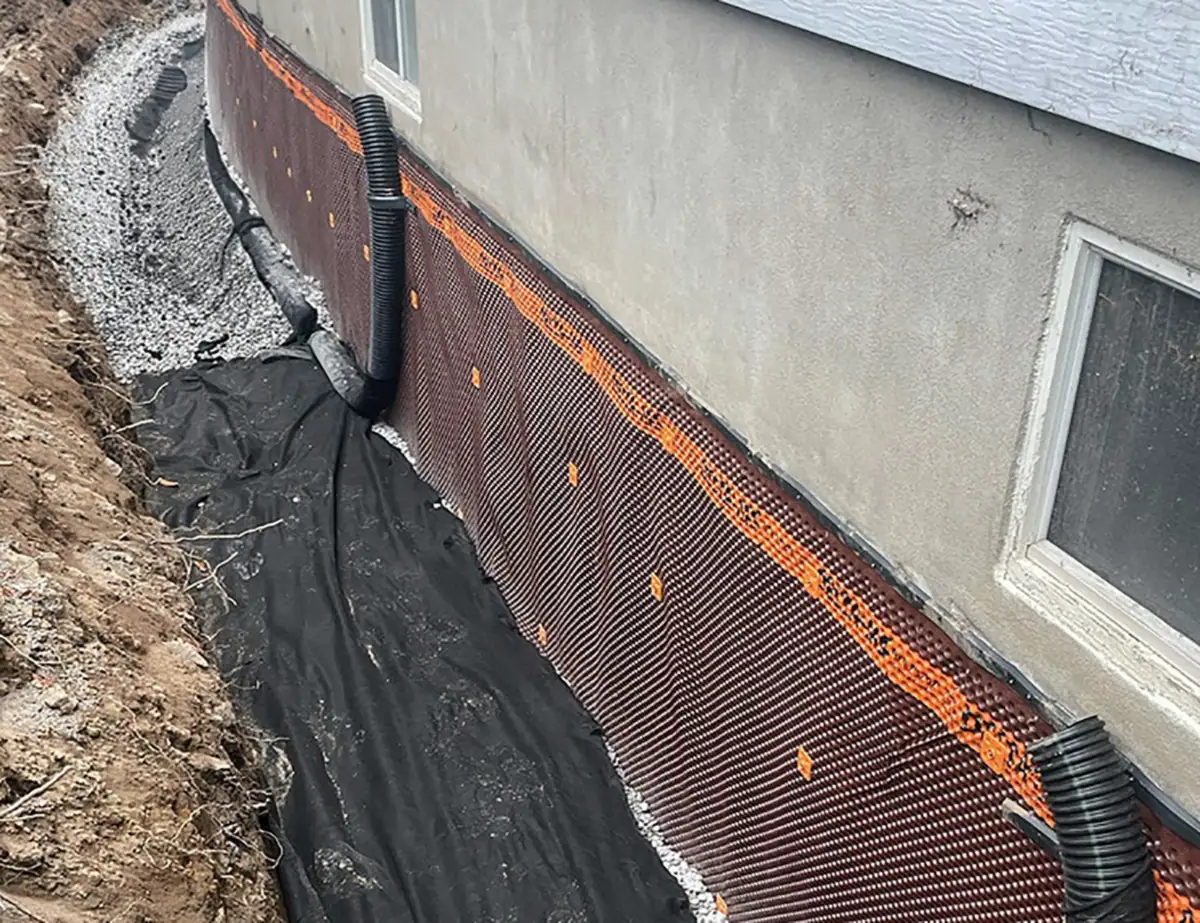
French drains and foundation membranes
S&L installs, replaces, repairs and inspects French drains around foundations, and applies a waterproofing membrane to protect the basement from water and moisture. The work is adapted to the clay soils of western Montreal.
What we do
Installation
A new French drain set in a bed of stone, around an existing house or a new foundation.
Replacement
Replacing a clogged, crushed or worn-out drain, on one section or all the way around the foundation.
Inspection and diagnosis
Finding the cause of water infiltration before digging, so only the necessary work gets done.
Waterproofing membrane
Applied to the foundation wall before backfilling, it keeps water in the soil from reaching the concrete.
What a French drain does
A French drain is a perforated pipe laid in a bed of stone at the base of the foundation. It collects the water that builds up in the soil around the house and carries it away before it can press against the wall and seep into the basement.
The membrane completes the system: it protects the foundation wall and guides water toward the drain. Together, they reduce water pressure on the foundation, as well as leaks and basement humidity.
Signs to watch for
- Water in the basement after heavy rain or when the snow melts
- A lingering damp or musty smell
- White stains (efflorescence) on the concrete
- Mould on walls or at the base of interior walls
- Cracks in the foundation
- Ground near the house that stays soggy
One of these signs on its own doesn't necessarily mean the drain needs to be redone. An inspection shows whether the problem is localized or whether the whole system needs to be replaced. For more, read the signs it's time to act.
Clay soil calls for a good drain
In several parts of western Montreal, the soil contains a lot of clay. Clay holds water and drains poorly, so a French drain in good condition is all the more important around a foundation.
Drain replacement, step by step
Site assessment
Inspection, soil, slopes and access around the foundation.
Excavation
Digging along the foundation down to the footing.
Drain installation
A new perforated drain in a bed of stone.
Protection
Waterproofing membrane on the wall, then backfilling.
Final check
Making sure the system works properly.
Our jobs


Frequently asked questions
How do I know if my French drain needs to be replaced?
The most common signs are water in the basement after rain, a damp smell, white stains on the concrete, mould, or ground that's always soggy near the foundation. An inspection can confirm the cause.
What does a foundation membrane do?
It's a waterproofing membrane applied to the outside of the foundation wall. It keeps water in the soil from reaching the concrete and directs it toward the French drain.
Does the whole French drain need to be redone?
Not always. An inspection shows whether the problem is localized, such as a crushed or clogged section, or whether the whole system needs to be replaced.
Why are French drains so important in the West Island?
Because several areas have clay soil, which holds water and drains poorly. Without a drain in good condition, water builds up against the foundation.


Get your free quote
Tell us about the work you need. We'll call you back to discuss it and prepare your quote.
Request a quote