
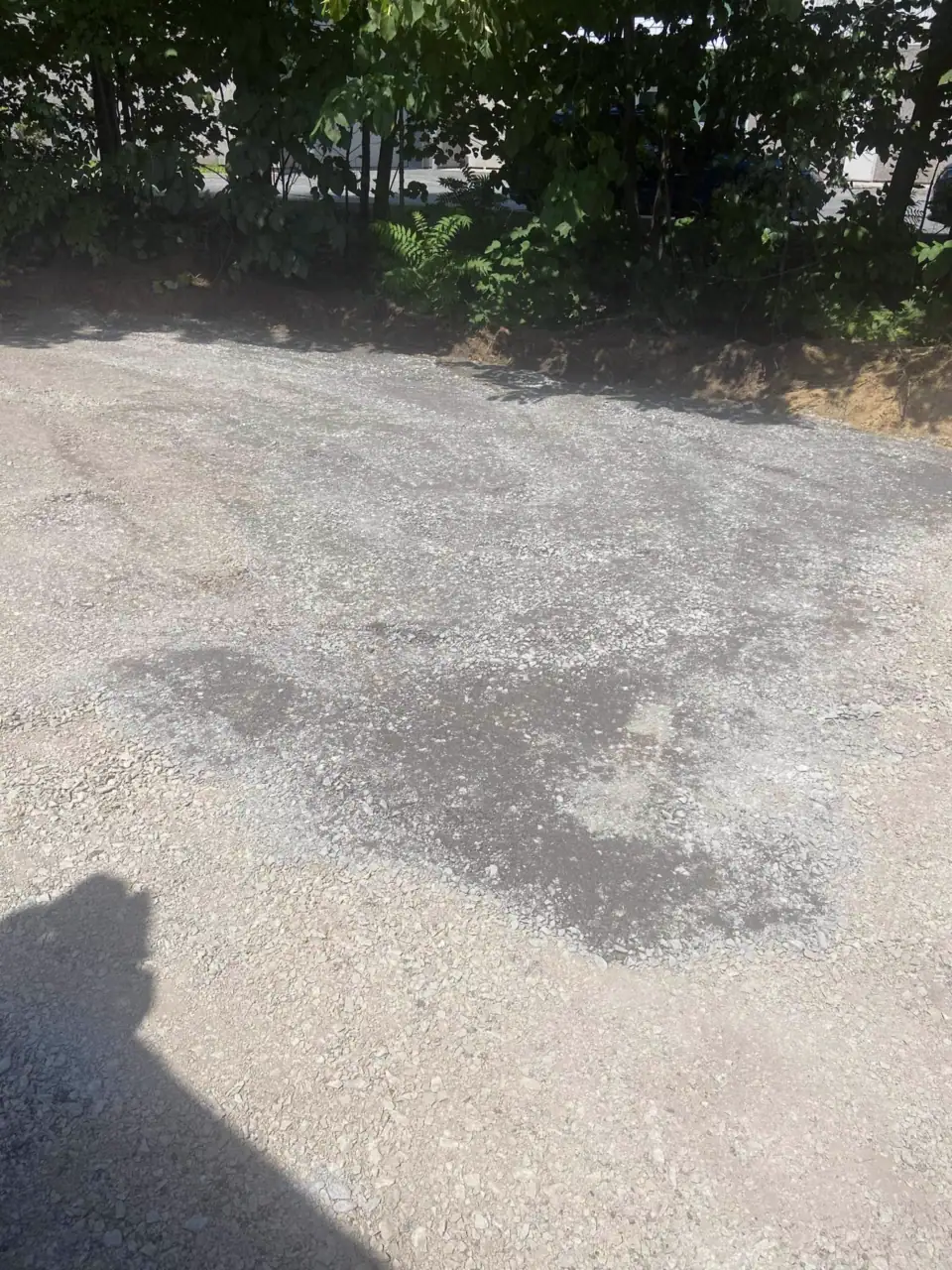
Bulk hauling : the right material, dumped where it will be used
Our bulk hauling service delivers soil, stone, sand, gravel and other construction materials, and takes away the soil that comes out of an excavation. Before the truck heads out, we work out with you which material suits the job and where to dump the load, so your driveway and lawn are spared.
Soil, stone or sand: choosing for the job
A lawn or flower bed needs soil made for growing: screened, free of rocks and debris, with organic matter. Fill, on the other hand, is for filling a low spot or raising a grade under the surface layer. Neither one belongs under a driveway or pavers as a base: soil holds water, settles and moves with frost. For new sod, see our landscaping service as well.
For the base of a driveway, a walkway or pavers, you want crushed stone with its fines, which compacts into a hard layer. For drainage, around a drain or behind a retaining wall, you want clear stone, with no fines, where water can move. Sand levels easily and water passes through it; it's used for backfilling and some bedding layers. Ordering one in place of the other costs you later: a base that shifts or drainage that clogs.
Where to dump the load
A dump truck drops its load all at once, usually in a single pile, wherever the truck stops. The pile then gets moved by wheelbarrow or machine, so the spot has to be chosen before the truck shows up: close to where the material will be used, on firm and fairly level ground. On a lawn, a pile left for several days smothers the grass underneath; on asphalt or pavers, a tarp makes cleanup easier.
The truck itself is heavy. A residential driveway isn't built for that weight, especially along its edges or when the asphalt is new, and neither are pavers laid for cars. The ground also has to be flat enough for the box to rise safely, and overhead, the box has to stay well clear of power lines and branches: before choosing the spot, we look up as much as down.
In spring, lighter truckloads
During the thaw, roads become more fragile than usual. To protect them, Quebec's transport ministry lowers the loads heavy trucks may carry on every public road in the province. It sets the dates every year, by zone, based on how far the thaw has progressed under the roads.
For you, that changes two things. Each truck carries less, so the same quantity can take more trips, and some jobs, like hauling away the soil from an excavation, are better planned before or after that period. And on your property, the ground thaws too: a soggy lawn won't carry a loaded truck, even after the road restrictions are lifted.
Before you order
What we settle with you before the truck heads out.
Gravel or crushed stone?
In everyday speech, people call almost any stone gravel. For a base, ask for crushed stone: broken into angular pieces, it locks together when compacted. Rounded, washed gravel rolls underfoot and under tires, and it won't form a stable layer, even after compaction.
Quantity
It's worked out from the area and the depth to cover. Stone loses volume when compacted and soil settles as it beds in, so you need more than the measured volume. We do that calculation with you in the quote.
Several materials, several loads
A dump truck generally carries one material per load. When a project needs stone and soil, the loads follow the order of the work: stone for the base first, surface soil last. Each material arrives shortly before it's needed, without sitting out in the rain.
Soil to haul away
If soil has to leave, tell us where it came from. Clean soil, soil mixed with concrete, wood or asphalt, and soil that might be contaminated don't go to the same places: keeping them separate from the start of the excavation makes hauling simpler.
A bulk delivery, step by step
Your project
You tell us what the material is for: sod, a driveway, a drain, fill. We confirm the right material and the quantity with you.
Access and drop spot
We check truck access and choose the dump spot with you: firm, level and clear of wires and branches.
Quote
A free quote covering the material, the quantity and the hauling, with the thaw period factored in for a spring delivery.
Delivery
The truck arrives on the agreed day and dumps in the chosen spot without driving over fragile surfaces.
Soil removal
If there's soil to take away, it leaves by truck for a site authorized to accept it.
Frequently asked questions
Clear stone or crushed stone with fines: what's the difference?
Both are often crushed stone; what sets them apart is the fines. With its fines, the stone contains every particle size, from dust to larger pieces: once compacted, they pack tightly into a dense layer, the kind you want under a paver driveway. Clear stone has been screened to keep only pieces of a similar size, and the gaps left between them let water through.
Can the load be dumped on the street?
In Montreal boroughs, including Lachine, LaSalle, Pierrefonds-Roxboro and L'Île-Bizard–Sainte-Geneviève, placing materials on the public road requires a permit for temporary occupancy of the public domain. The other cities in the area, such as Dorval or the Town of Mount Royal, have their own rules. The simplest option is to dump on your property, in a spot chosen ahead of time: firm, level and clear of power lines.
Can the truck dump in my backyard?
Only if there's a way in: enough width between the buildings, a gate, no wires or branches in the way, and ground firm enough to carry the loaded truck. When a back lane opens onto the yard, it sometimes offers easier access. Otherwise, the load is dumped out front, then moved by wheelbarrow or with a small machine.
What happens to the soil removed during excavation?
Whatever can be used on site, for backfill or grading, stays on the property. The rest leaves by truck for a site authorized to accept that type of soil. On a property where a heating oil tank leaked, or that had a commercial or industrial use, the soil may be contaminated. If it is, transporting it is governed by a Quebec regulation that tracks every load to an authorized site.
See also

Excavation and grading
Excavation and demolition
Excavation for foundations, additions, renovations and infrastructure, slope correction and ground preparation before asphalt, interlocking pavers or sod.
Learn more
Landscaping
Pavers and landscaping
A yard that keeps water off the walls before it looks good: grading, good topsoil, planting, sod, concrete slabs, trench drains and seasonal upkeep.
Learn more
Driveways and walkways
Pavers and landscaping
Paver driveways, walkways and patios, on their own or framing asphalt: a base compacted in layers, solid edge restraints and joints filled right to the top.
Learn moreAreas we serve
Bulk deliveries and excavated soil removal cover every area listed below, from Lachine outward.

Get your free quote
Tell us about the work you need. We'll call you back to discuss it and prepare your quote.
Request a quote