

Asphalt driveway paving : houses, semi-detached homes, plexes and garage ramps
We pave and rebuild asphalt driveways for houses, semi-detached homes and plexes, side driveways and garage ramps included. The old surface comes out, the ground is excavated to suit the soil, and the asphalt goes down on well-compacted crushed stone, with a slope that moves water away from the house, or down to the catch basin of a garage ramp.
Under an asphalt driveway: what comes out, what goes in
The job starts with a clean cut wherever the new asphalt will meet pavement that's staying, such as the neighbour's driveway, and then the old asphalt is removed. What's underneath decides the rest: a stone base that's still sound, which we regrade and recompact, or soil and clay sitting right under the old surface. In that case, we excavate to make room for a real stone base, deeper where the ground is soft; excavation and grading are part of the same job.
The crushed stone is then spread and compacted in layers. It carries the weight of the cars and lets water drain through. The slope is shaped at this stage, in the stone itself, so the asphalt on top keeps an even thickness and water runs toward the street or a drainage point, never toward the foundation.
Garage ramps that slope down: the water always ends up at the bottom
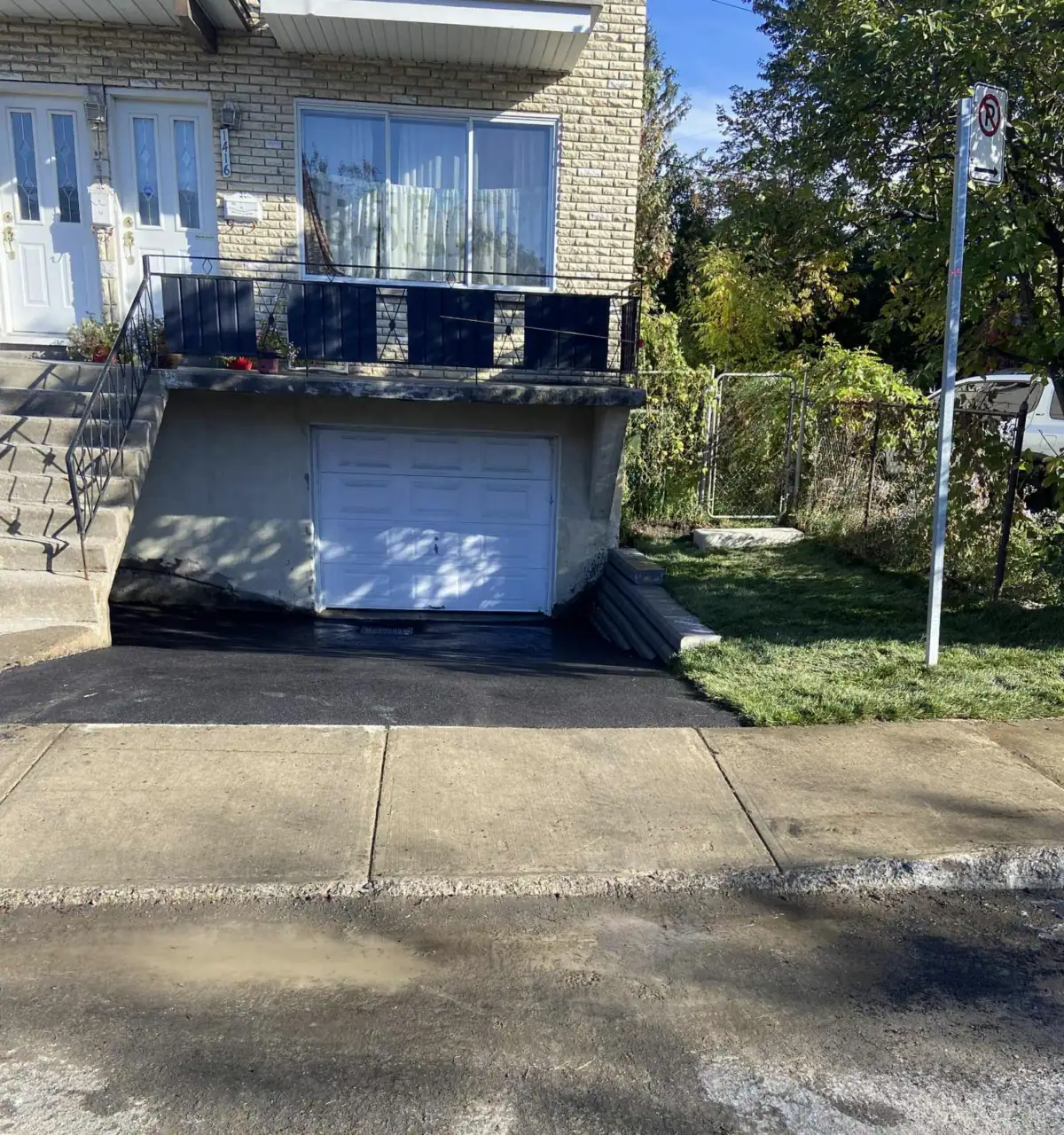
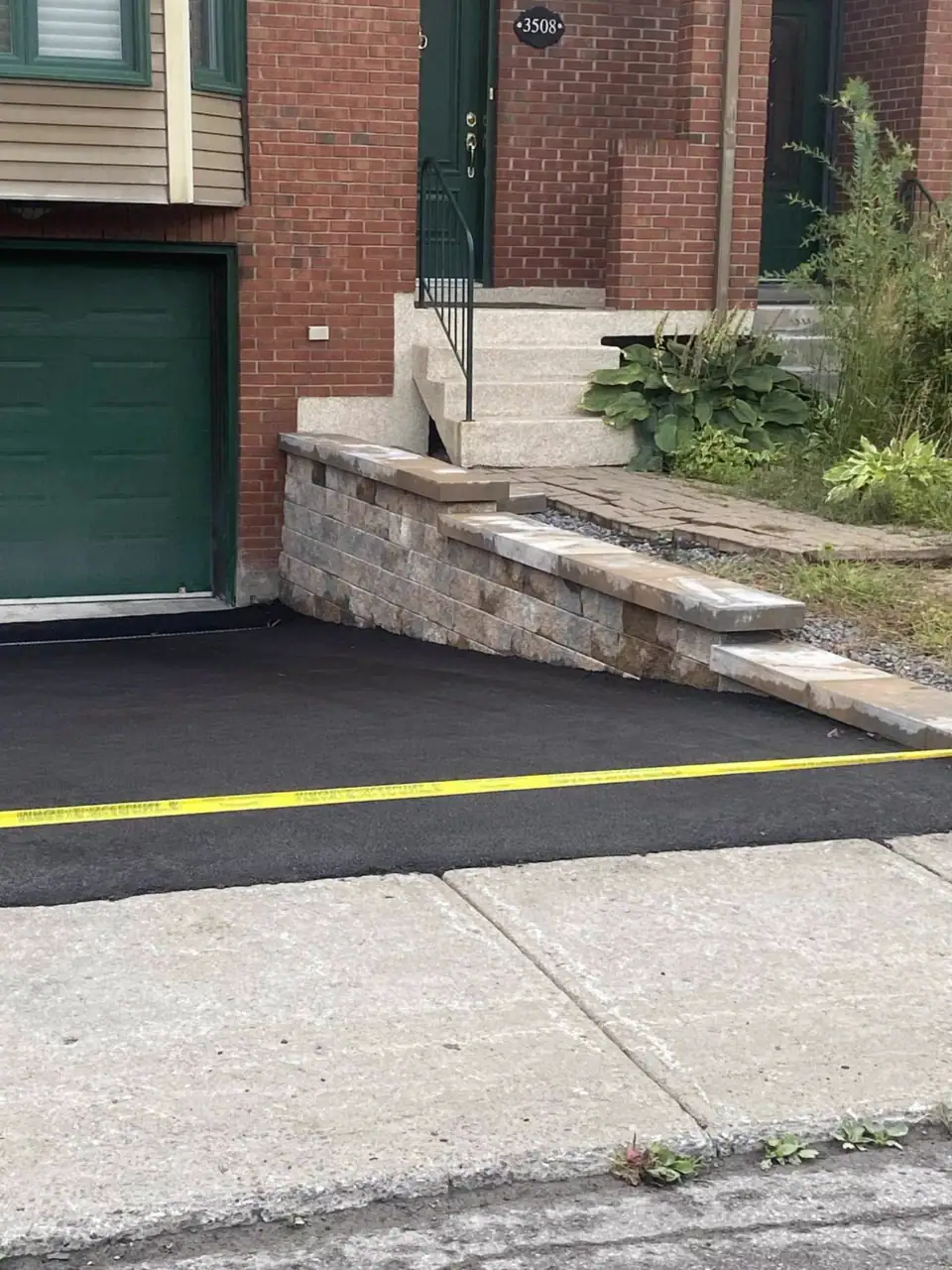
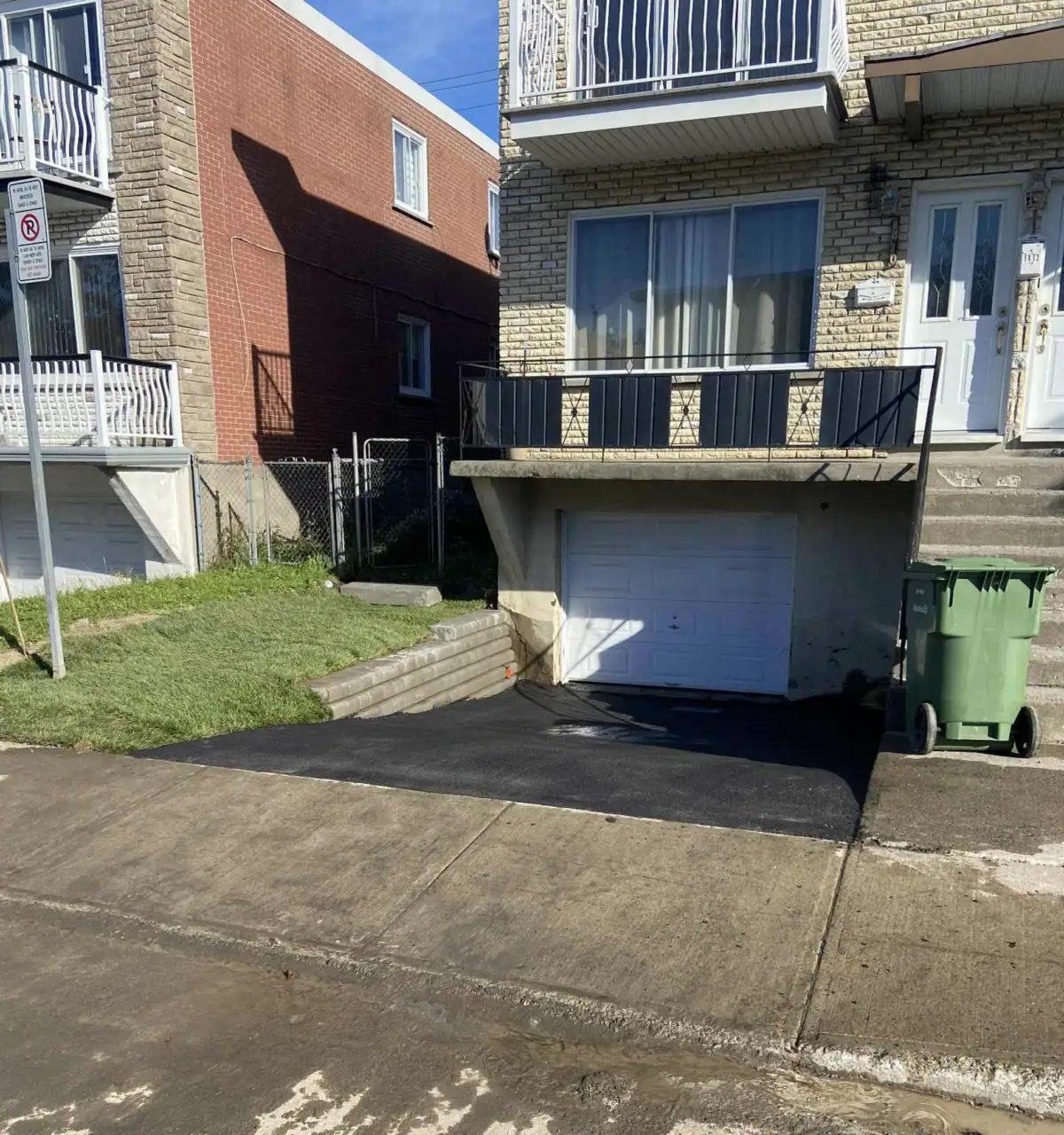
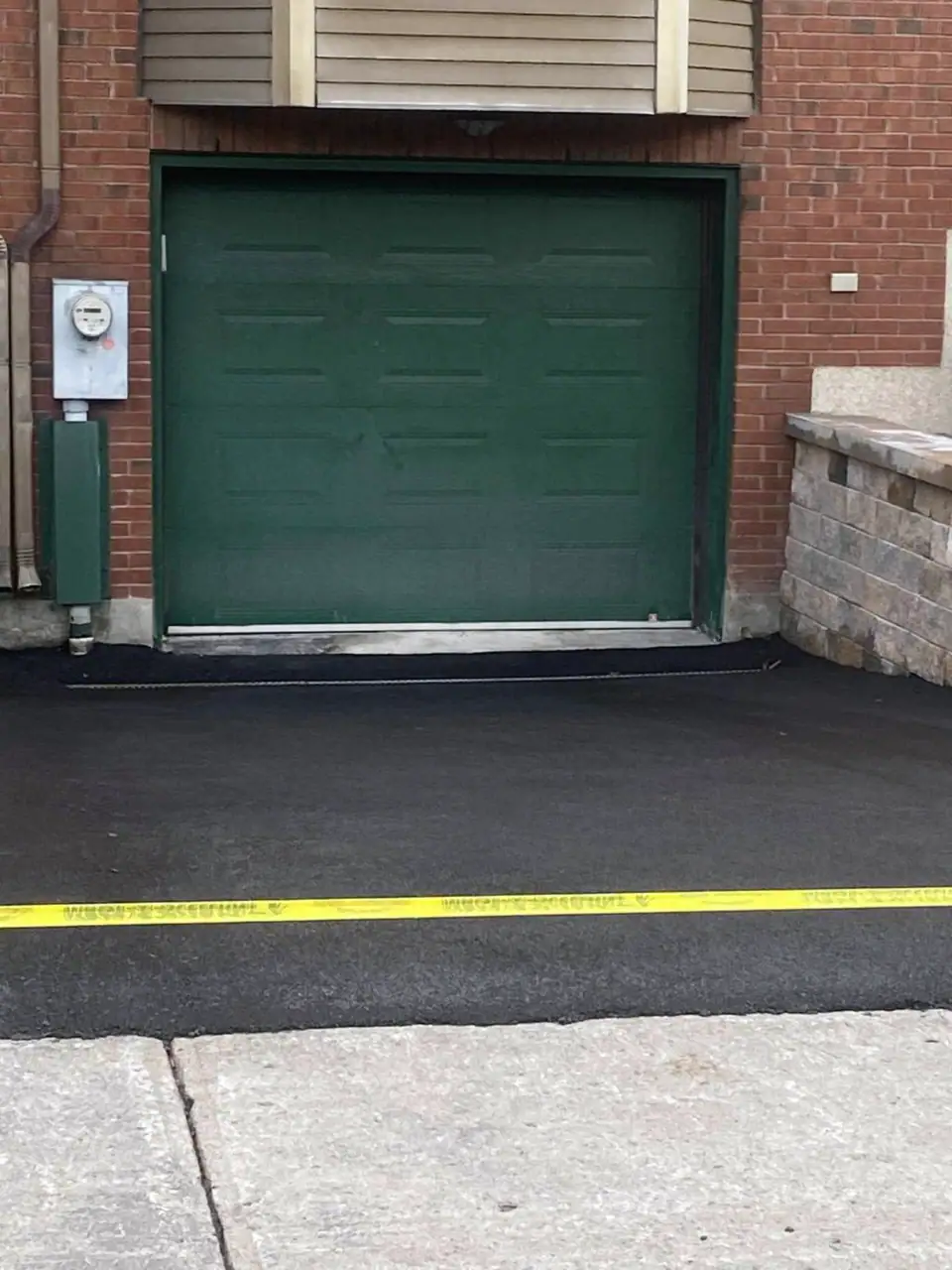
When the garage sits lower than the street, as it does in many Lachine and LaSalle plexes, all the rain that falls on the ramp runs toward the door. The top of the ramp matters as much as the bottom: a high point between the street and the slope keeps street water from following the same path. We keep it when we pave and never lower it.
At the bottom, the asphalt has to carry the water into the catch basin, with no low spot beside the grate, no lip holding water back and nothing sending it toward the door. Before paving, we check that the catch basin drains properly. If it's clogged, now is the time to have it cleaned, before new asphalt goes in all around it.
Joins, the first few days and the first sealcoat
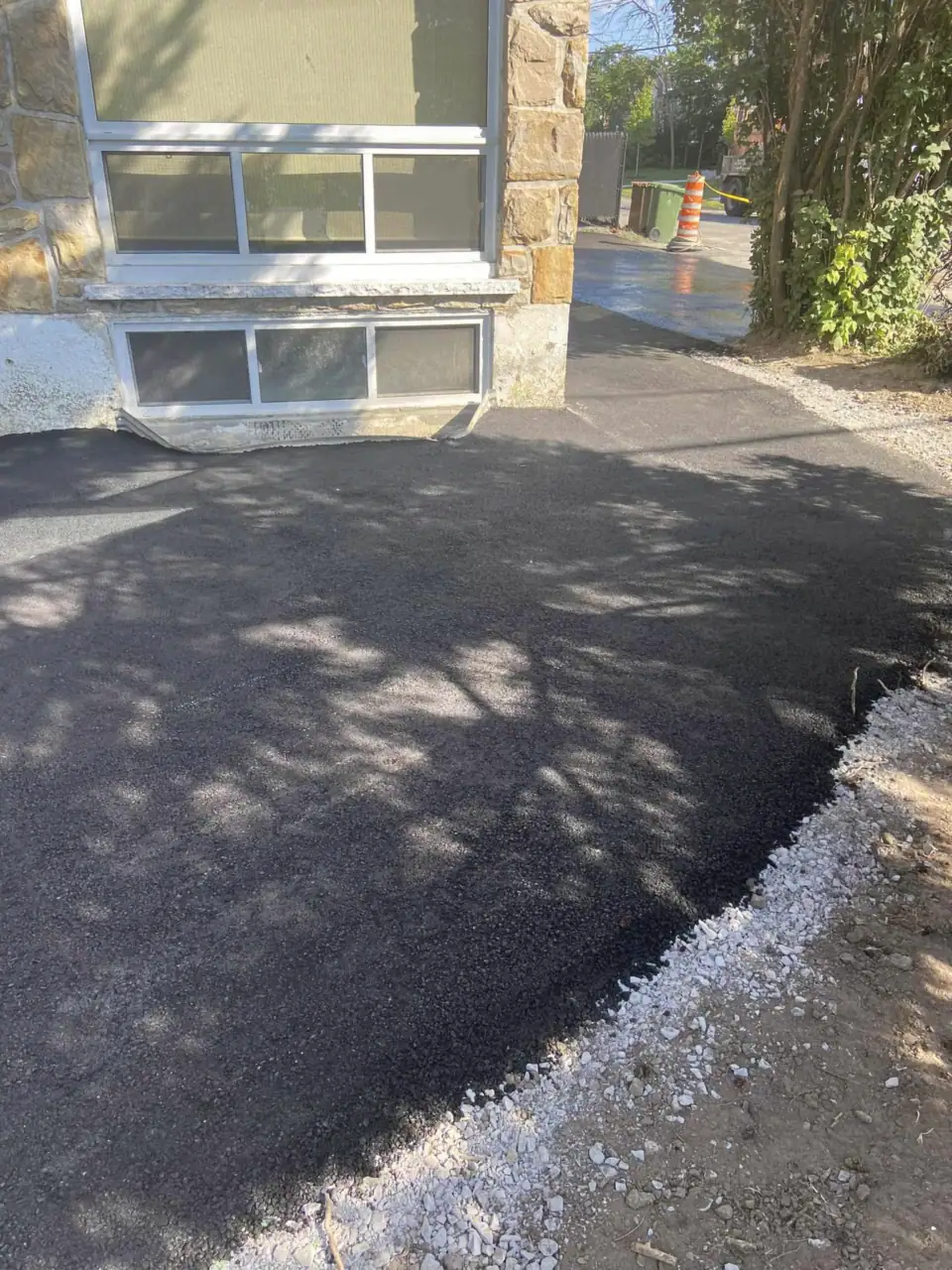
Along the sidewalk and the curb, the asphalt meets the concrete at the same level, with no lip and no dip: a low spot along the joint holds water, which eventually works its way under the asphalt. On the lawn or garden side, we backfill against the edge, because an asphalt edge left unsupported crumbles.
For the first few days, new asphalt hasn't finished hardening. Avoid concentrated loads (a motorcycle kickstand, a trailer jack, a dumpster), stay off the edges, and keep gas and oil off the surface: they attack asphalt, especially when it's new. Its first sealcoat comes six to twelve months later.
From one driveway to the next
The principles don't change, but every driveway has its own tricky spot.
Semi-detached: the neighbour's driveway
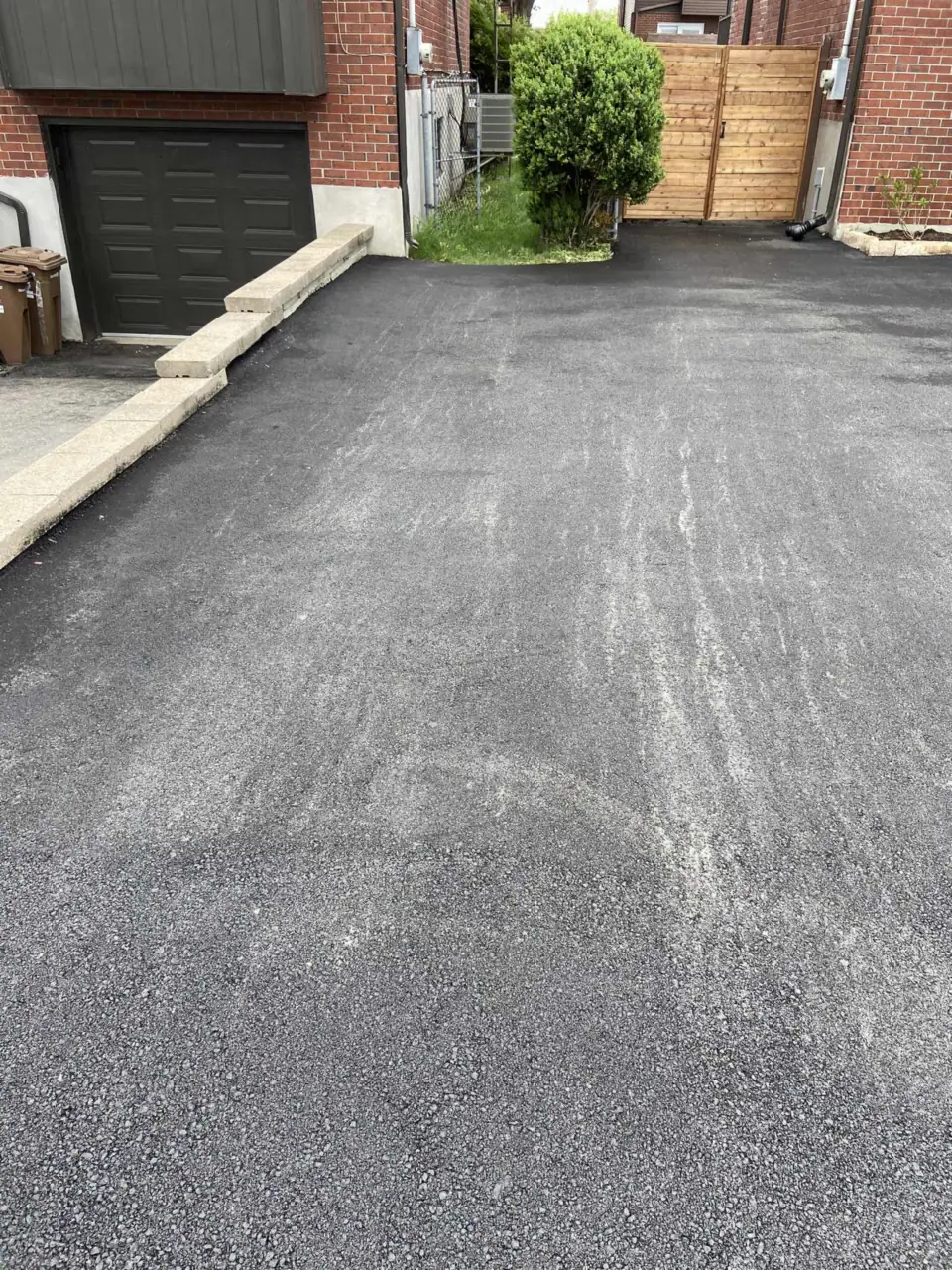
On a semi-detached home, the driveway often runs right up against the one next door. We cut cleanly at the line and match the levels so water doesn't cross from one driveway to the other. If your neighbour is redoing theirs too, both can be paved at the same time.
Plexes: the side driveway
The narrow driveway between two buildings often leads to parking in the back. Water has to run along its length, away from both foundations, and the work is done with equipment sized for the width of the passage.
Along the foundation
After French drain work, the backfill along the wall has to be well compacted before anyone paves over it. Otherwise it keeps settling and the asphalt sinks along the house, right where water shouldn't sit.
Asphalt bordered with pavers
A paver border, or a walkway leading to the door, is planned during the prep work: both surfaces are built in the same excavation and finish at the same level, with the same slope. The border also gives the asphalt a clean, supported edge.
Driveway paving, step by step
Site visit and levels
We measure the slopes and note the levels to work with: sidewalk, curb, garage threshold, catch basin and the neighbour's driveway.
Removal and excavation
Clean cuts at the edges, the old surface removed, then excavation to the depth the soil underneath calls for.
Stone base
Crushed stone is spread and compacted in layers. This is where the driveway's slope gets built in, right in the stone.
Laying the asphalt
Hot asphalt is spread, then compacted with a roller. Joins at the sidewalk, curbs and around the catch basin are finished by hand.
Finishing and instructions
Edges backfilled, cleanup, a check that water drains where it should, and instructions for the first few days.
Our jobs

Frequently asked questions
Do I need a permit to redo or widen an asphalt driveway?
Rules vary between cities. Widening a driveway or changing the curb cut, the lowered section of sidewalk and curb, is often a municipal matter, and the city decides what's allowed. Before planning a wider driveway, check with your city or borough. Even for a straight replacement of the surface, it's worth asking.
Can new asphalt be laid over an old driveway?
It can, if the base is holding up and there's height to spare, but a driveway leaves little margin. Every layer you add lifts the driveway, but the garage threshold, the sidewalk and the catch basin don't move. And under old asphalt, you can't see the base: if it has failed, the new layer will crack along the same lines. During the visit, we tell you if resurfacing makes sense.
What time of year can a driveway be paved?
From spring to fall, once the ground has thawed and the base is neither frozen nor soaked. Asphalt goes down hot and has to be compacted before it cools; in cold weather, it cools too quickly to compact properly. In spring, the reduced truck loads allowed during the thaw can also delay excavation and stone deliveries.
How much does an asphalt driveway cost?
What moves the price: the size of the driveway, what has to be removed and hauled away, how deep the soil requires us to dig, how much stone needs to be added and how easily machinery can get in. Driveways of the same size can cost very different amounts. That's why we visit before pricing: the quote is free and lists the planned work.
See also

Sealcoating
Asphalt
Repairs first, a cleaned surface, sealer in dry, mild weather, then lines repainted in parking lots: protection for asphalt that's still in good shape.
Learn more
Excavation and grading
Excavation and demolition
Excavation for foundations, additions, renovations and infrastructure, slope correction and ground preparation before asphalt, interlocking pavers or sod.
Learn more
Driveways and walkways
Pavers and landscaping
Paver driveways, walkways and patios, on their own or framing asphalt: a base compacted in layers, solid edge restraints and joints filled right to the top.
Learn moreAreas we serve
From LaSalle plexes to Kirkland family homes, we pave driveways throughout the areas listed below.

Get your free quote
Tell us about the work you need. We'll call you back to discuss it and prepare your quote.
Request a quote